Attention:
For your safety, and the safety of others, please stay in your home and only leave for necessary trips, such as a weekly shopping trip. Governor Larry Hogan has issued a mandatory stay-at-home order. The MD Office of Legal Council has released documentation explaining which businesses are essential and may remain open. Per the instructions of the governor, we are organizing online for the foreseeable future.How Rare High-Grade 1947 Wheat Pennies Became
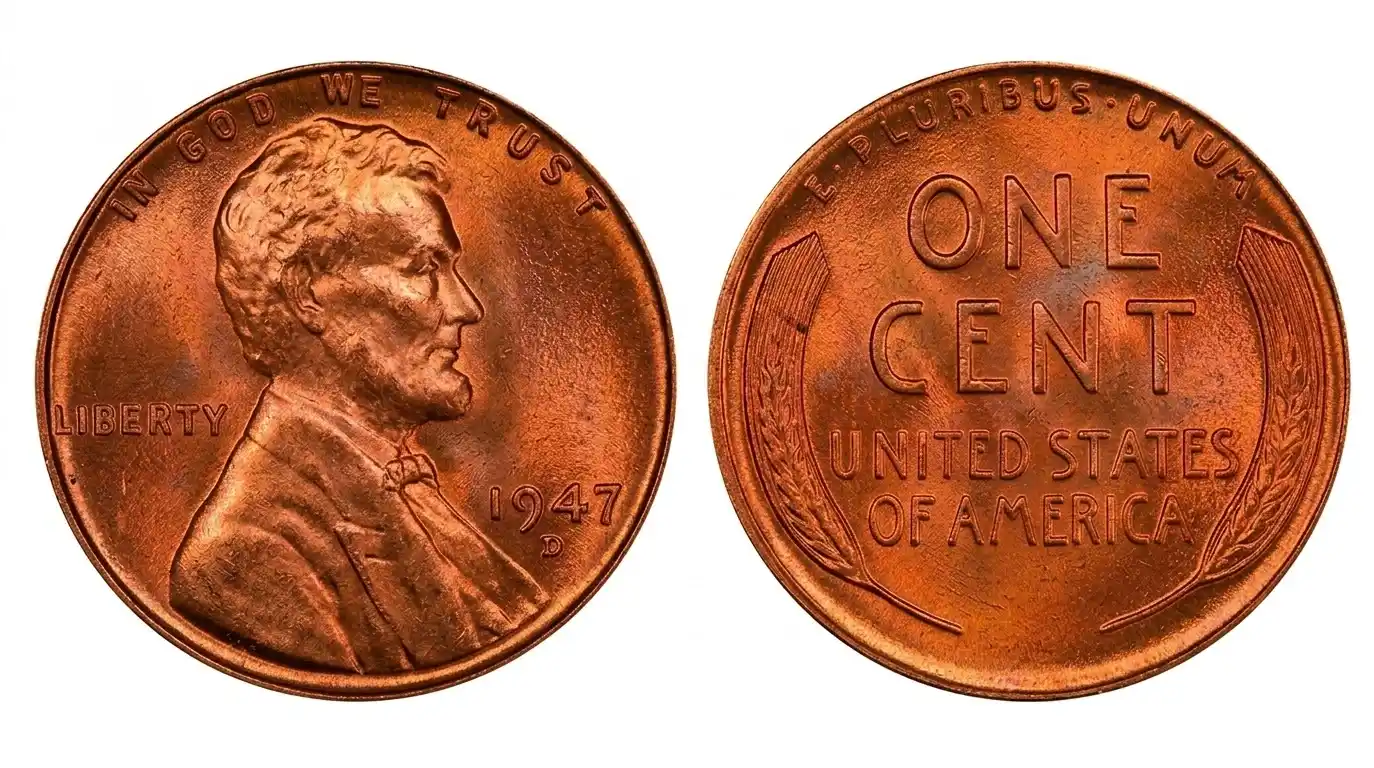
Untouched examples remain much harder to find today compared to common circulated units.
Current population and 1947 Wheat Penny value reports from grading services confirm a small survival percentage for top-tier items.
Metric | Specification |
Standard Mass | 3.11 grams |
Exterior Diameter | 19.05 millimeters |
Edge Thickness | 1.55 millimeters |
Copper Proportion | 95% |
Tin and Zinc Proportion | 5% |
Edge Treatment | Plain |
Manufacturing precision ensured uniformity across hundreds of millions of units.
Laboratories tested the copper purity to maintain structural integrity.
Any deviation in mass led to the immediate rejection of the metal batch.
Specific gravity tests confirmed the density of the bronze alloy used for these planchets.
Strict oversight prevented the use of contaminated metals during the melting phase.
Quality control agents monitored the thickness of the rolled metal strips.
Uniformity across the 1947 production remains a hallmark of the post-war era.
Survival Statistics in Professional Registries
Grading reports provide an objective view of condition distribution.
Most submitted coins fall within the MS63 to MS65 range.
Units reaching the MS67 threshold decrease in number exponentially.
Survival factors follow this general distribution.
Circulation wear → 98% of total mintage
Improper storage conditions → 1,5% of total mintage
Preservation of collection quality → 0,5% of total mintage
Numerical data explains the high market worth associated with flawless specimens.
Market liquidity depends on the availability of these certified gems.
Scarcity drives the valuation of the highest grades in 2026.
Comparing modern populations reveals the difficulty of locating high-end examples.
Fewer than 500 coins currently hold the MS67 Red designation across all services.
This tiny fraction of the original mintage creates intense bidding wars.
Professional investors track these population numbers with extreme precision.
Philadelphia Mint: Analysis of No-Mark Units
Philadelphia struck 190,736,000 cents lacking a mint mark.
High volume did not guarantee consistent striking quality across all production batches.
Die wear often resulted in a loss of fine detail on the wheat stalks.
Philadelphia issues frequently show dark spotting on the copper surfaces.
Market price trends for 1947 MS66 Red:
2024 price: $35
2025 price: $42
2026 price: $50
Annual appreciation for this grade reaches 18%.
Record pricing for a 1947 Philadelphia specimen in MS67+ Red reached $9,400.
Public auctions handled this transaction in 2019.
This result stems from the extreme scarcity of units graded above MS67.
Finding a specimen with full hair details is quite difficult for this branch.
Strike sharpness often varies between early and late die states.
Coins produced with fresh dies exhibit incredible luster and crisp lines.
Late die states show mushy details and radial flow lines.
Most Philadelphia survivors fall into the latter category.
Denver Mint: Specifics of 1947-D Condition
Denver produced the largest quantity of cents during this period.
A small D located under the date identifies the origin of the unit.
Denver strikes often feature a sharper relief compared to other facilities.
Higher striking pressure improved the clarity of the design elements.
Market values for 1947-D in 2026:
Grade | Color Category | 2026 Worth |
MS65 | Red | $28 |
MS66 | Red | $65 |
MS67 | Red | $410 |
MS67+ | Red | $1,150 |
Growth rates for rare grades exceed typical inflation markers.
Maximum recorded value for 1947-D MS67+ Red reached $4,113.
Maintaining the Red category remains critical for achieving these price levels.
Denver coins often exhibit fewer contact marks than Philadelphia issues.
Surface preservation defines the final auction outcome.
The regional climate in Colorado likely contributed to better copper preservation.
Lower humidity reduced the rate of oxidation for coins stored in Denver.
Collectors frequently discover vibrant red gems originating from this facility.
San Francisco Mint: Quality Issues for 1947-S
Total output for the western facility reached 99,000,000 units.
The S mark sits directly below the date.
Many batches from San Francisco exhibit a soft strike.
Finding examples featuring full detail on individual grains is difficult.
Price growth for 1947-S MS67 Red:
2024 price: $210
2025 price: $245
2026 price: $290
Yearly value increases remain steady at 16%.
Record auction worth for 1947-S reached $6,463 for an MS67+ Red specimen.
Trading data confirms a permanent shortage of these specific items.
Collectors often search for 1947-S units with clear wheat lines.
Low mintage numbers increase the base value of the S-mint coins.
San Francisco minting equipment often struggled with die alignment.
Slightly tilted strikes occur more frequently in the 1947-S population.
Locating a perfectly centered specimen with full details requires patience.
Professional Classification of Surface Color
Copper reacts to environmental changes through a series of visual transformations.
Color serves as a primary indicator for final market pricing.
Red RD
This designation requires the preservation of 95% original mint luster.
Investors view these units as the most liquid assets.
Market prices for Red units often quintuple the value of brown alternatives.
Maintaining this status requires a vacuum-sealed environment.
Any exposure to ambient air risks dropping the coin to the next category.
Red coins represent the pinnacle of copper numismatics.
Red-Brown RB
The remaining luster falls between 5% and 95% for this category.
Coins display a mixed appearance of original color and patina.
Value remains at a moderate level for this classification.
Many coins transition to RB due to long-term storage in paper envelopes.
The sulfur in the paper reacts with the copper metal.
This reaction creates the characteristic darkening found on these surfaces.
Brown BN
Surfaces appear fully darkened with less than 5% original color.
Almost all coins found in circulation fall into this category.
Worth for these examples remains minimal compared to higher color grades.
Brown coins typically possess the most durable surfaces.
Oxidation creates a protective layer preventing further corrosion.
Market demand for BN units remains limited to low budget collections.
Rare Minting Errors and Mechanical Deviations
Verified factory mistakes increase market value beyond standard pricing tables.
Professional certification confirms the legitimacy of these mechanical errors.
Double Die Obverse
Misalignment during the die creation process causes a doubled image.
Doubling appears clearly on the date digits and motto lettering.
Pricing for an MS65 specimen with this error stands at $115.
Identifying this error requires Coin ID Scanner.
Secondary lines on the word LIBERTY confirm the variety.
Market interest in 1947 doubled dies has increased by 10% annually.
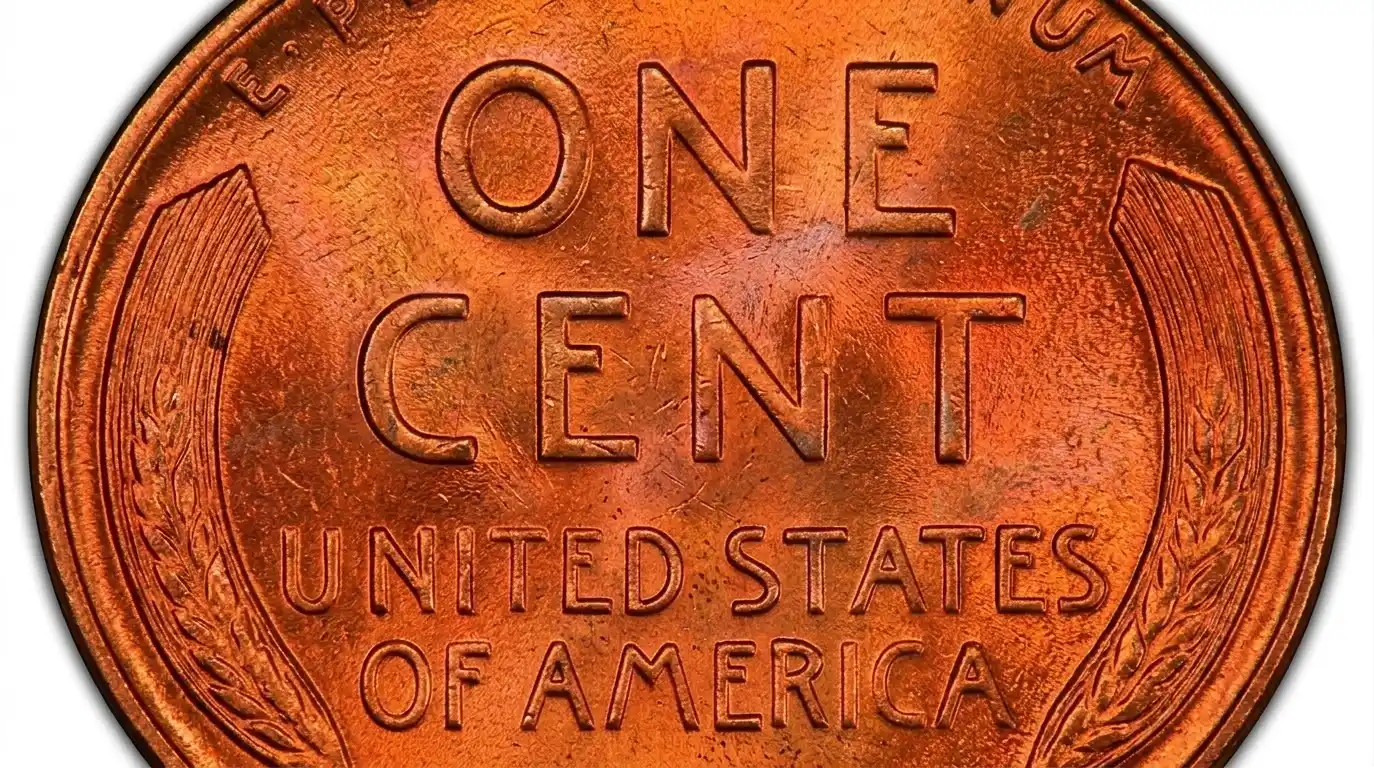
Re-punched Mint Mark
Secondary impressions of the D or S letter occur after striking the die twice.
Visible outlines of the mint mark indicate this specific variety.
Market premiums for this error typically reach $45.
Hand-punched marks in 1947 often resulted in these minor misalignments.
Inspectors sometimes overlooked these small deviations during the quality check.
Off-Center Strike
Improper feeding of the metal blank results in a partial design transfer.
Worth depends on the percentage of missing detail.
10% shift → $25 value
50% shift → $140 value
Extreme shifts showing the date remain the most valuable.
Coins missing the date entirely carry a significant discount.
Clipped Planchet
Errors during the blanking process create incomplete circular shapes.
Curved missing sections confirm the authenticity of the mistake.
Prices for verified clips range from $35 to $85.
Authentic clips display a characteristic metal flow near the cut edge.
Counterfeit clips lack this structural distortion.
Industrial Metal Preparation in Post-War Periods
Production cycles in 1947 returned to pre-war metallurgical standards.
Mint laboratories monitored the purity of the metal strips.
Manufacturing followed a set sequence of stages.
Melting ingots → Rolling strips → Blanking circles → Annealing → Striking
Annealing softened the metal structure for better relief penetration.
Temperature fluctuations occasionally created brittle metal blanks.
Using aged dies caused the development of micro-cracks on the coin surface.
Each industrial step influenced the final grade of the product.
Uniform heating prevented the formation of interior air bubbles.
Quality control teams rejected batches displaying surface irregularities.
Post-war labor shortages sometimes affected the frequency of die changes.
Extended die usage led to the orange peel texture found on many coins.
Impact of Storage Methods on Luster Survival
Maintaining the Red category requires total exclusion of air contact.
Humidity serves as a catalyst for the darkening of the metal.
Specific methods assist in long-term preservation.
Using plastic holders lacking chemicals prevents surface corrosion.
Storing items in safes with moisture control slows the reaction to air.
Avoiding direct light preserves the original mint frost.
Improper storage in paper envelopes reduces the grade within months.
Value for damaged specimens drops by 50% within a single year.
Sulfur content in old paper reacts poorly with copper.
Modern archival materials provide a safe environment for these assets.
Intercept technology utilizes copper particles to neutralize harmful gases.
Collectors investing in high-grade 1947 cents must prioritize these protection systems.
Market Trends and Projections for 2026
The Wheat Penny market shows resilience against broader economic fluctuations.
Investors treat rare grades as a defensive asset class.
Value changes over the previous five-year cycle:
2022 → 12% growth
2023 → 14% growth
2024 → 15% growth
2025 → 16% growth
Projected growth for 2026 stands at 17%.
Decreasing supply for top-tier coins stimulates intense competition.
Demand for certified errors grows at an even faster pace.
High-grade survivors become harder to acquire each year.
International buyers entering the market have increased overall liquidity.
Online bidding platforms allow global participation in major auctions.
This expanded reach supports the rising price floors for MS67 units.
Professional Grading Procedures
Independent experts determine the condition using a coin app.
Identifying minimal contact marks is the primary goal of the inspection.
The 70-point Sheldon scale serves as the international standard.
Main stages of the quality check:
Visual inspection of the front → Analysis of the back → Edge check → Color determination
Grade MS67 applies only to coins lacking any visible flaws.
Having a certificate increases the liquidity of the asset by 40%.
Graders evaluate the luster consistency across the entire surface.
Strike strength counts toward the final numerical grade.
Weakly struck coins rarely achieve the MS67 threshold regardless of surface cleanliness.
1947 units often face strict scrutiny due to common strike softness.